


.svg)

For many people, “eating well” is still imagined as a perfect day.
Sure, a perfect day does exist. A day where every meal is homemade. Protein is perfectly spaced. Fruit and vegetables appear at every meal. Carbs are timed around exercise. Nothing is rushed, skipped, grabbed from a petrol station, or eaten in the car.
That kind of day can be great when life allows it. But it is not the only version of success.
The problem starts when we treat that ideal as the only standard worth aiming for. Because once the day stops looking perfect, it can feel like we have failed. And when people feel they have failed, they often stop trying altogether.
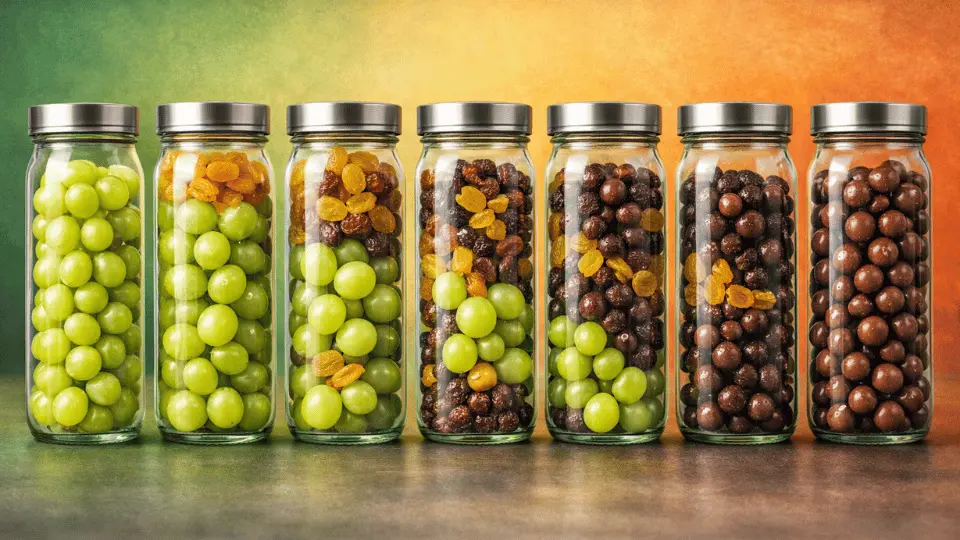
A more sustainable way to think about nutrition is as a continuum.
At one end is the day where we have lots of control, time, energy, and planning capacity. At the other end is the day where life is chaotic, work runs over, routines break down, and we are simply trying to get through it. Most real life happens somewhere in between.
The goal is not to eat perfectly every day. The goal is to keep making tolerable, realistic decisions that help us stay broadly aligned with our intentions.
That is what consistency looks like.
Let’s start with the ideal.
On a day where things are going well, we might aim for:
This can be a very helpful reference point. It gives structure. It shows us what full control can look like. It can also help with meal planning and preparation.
But it is only one point on the spectrum.
If we use it as a guide rather than a rule, it becomes motivating.
If we use it as a test we have to pass, it quickly becomes discouraging.
A sustainable approach to nutrition must work not only on calm days but also on busy days, stressful days, travel days, and messy days.
That might mean:
These are not signs that you are off track.
They are signs that you know how to stay on track in the real world.
One of the most powerful nutrition skills is the ability to recover quickly.
Not to punish yourself after a takeaway.
Not to “start again on Monday”.
Not to write off the whole day because lunch was rushed and dinner was takeaways.
Instead, you return to the next available opportunity.
That might mean:
This matters because long-term outcomes are shaped far more by repeated patterns than by isolated meals.
A helpful shift is to stop making the outcome the main daily target.
Weight loss, improved health markers, better energy, and better body composition matter. But these are outcomes. They are not behaviours you can perform today.
What you can do today is follow a process.
Examples of process goals include:
These process goals are practical. They are repeatable. They are measurable in real life. And over time, they are what drive outcomes.
This is where trust becomes important.
You do not need to force every result in a day.
You need to keep showing up for the process often enough that the results have room to happen.
On the high control day
Breakfast is eggs on toast with tomatoes and fruit.
Lunch is a homemade chicken salad wrap.
Dinner is mince, rice, and roasted vegetables after training.
Snacks are yoghurt, fruit, or leftovers.
That is a great day.
On the busy day
Breakfast is a protein yoghurt and banana.
Lunch is a supermarket chicken wrap with a side salad.
Dinner is a quick stir fry using a pre-cut veg mix and microwave rice.
That is also a great day.
On the mad day
Breakfast is a coffee and a bottled yoghurt on the go.
Lunch is a chicken sandwich grabbed between meetings.
Dinner is takeaways, but you add a side salad or choose a meal with a decent protein source.
You keep moving forward instead of deciding the day is ruined.
That still counts.
Because success is not about whether the day looked ideal.
It is about whether you stayed engaged with the process.
Instead of asking:
“Was today perfect?”
Try asking:
“What did I do today that kept me connected to the kind of person I am trying to be?”
Maybe you added protein where you could.
Maybe you bought something convenient instead of skipping meals.
Maybe you avoided the all-or-nothing mindset.
Maybe you got back on track at the very next meal.
That is progress.
That is skill.
That is what sustainability actually looks like.
Healthy eating is not a single rule, and it is not a pass or fail test.
It is a continuum.
Some days will give you the time and control to do everything exactly as planned.
Other days will call for shortcuts, swaps, and compromises.
Both can still move you forward.
The win is not perfection.
The win is staying in the game.
When you focus on the process, trust the process, and keep adapting with intention, outcomes can begin to take care of themselves.


.svg)


